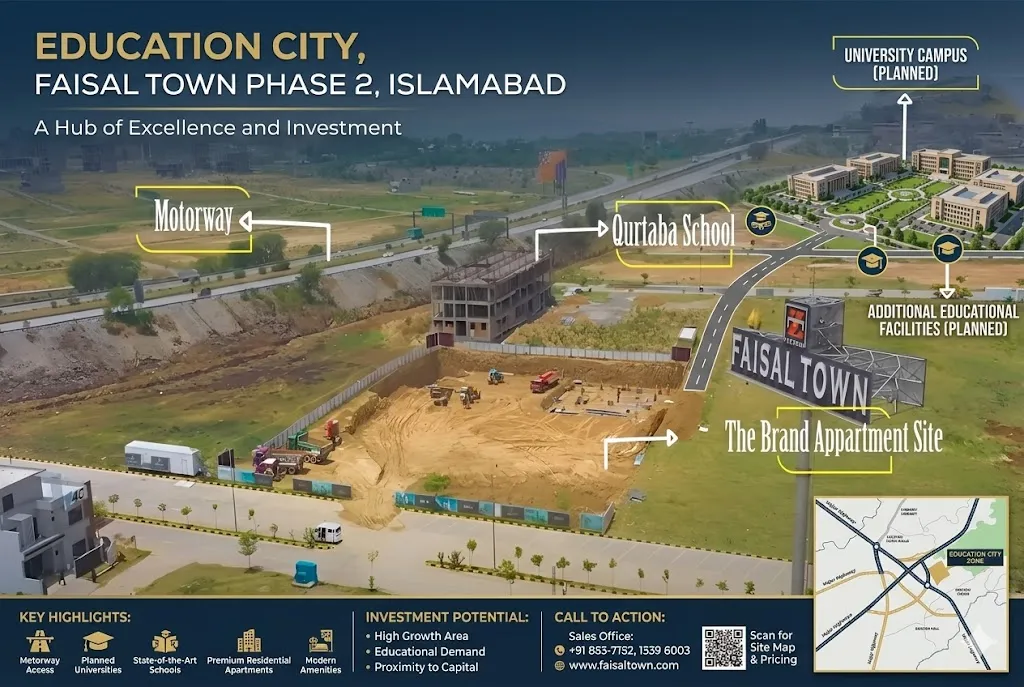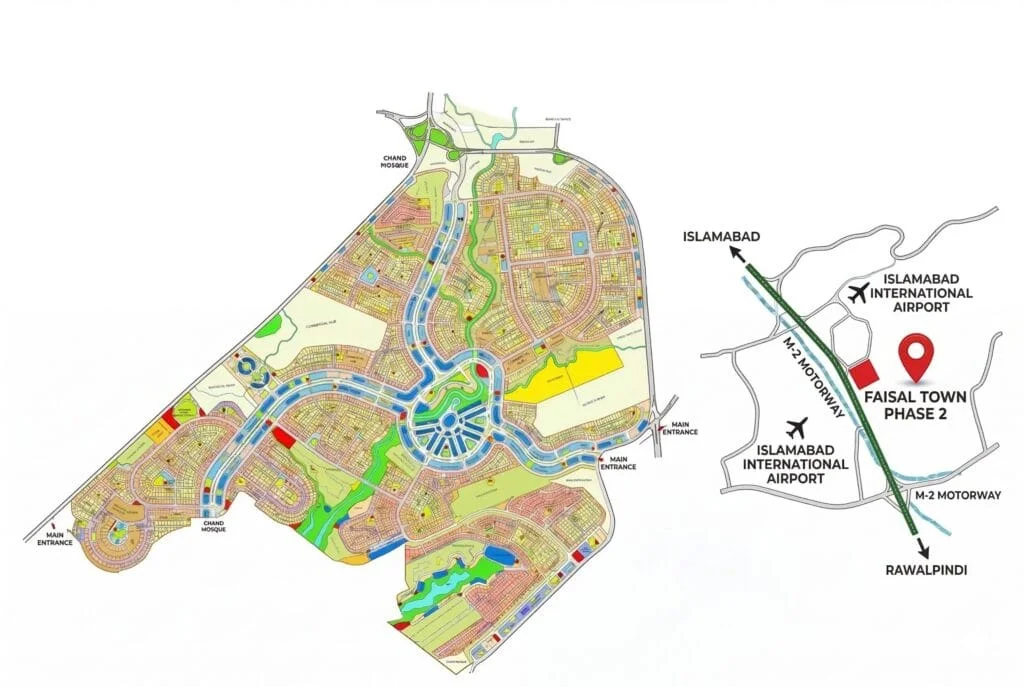

If you’re a British Pakistani thinking about buying land back home, the good news is you don’t need to be in Pakistan to do it. Most of the process choosing a plot, submitting documents, sending payment can be handled from the UK, with a Power of Attorney covering anything that legally needs someone present in person. This guide walks through what documents you’ll need, how payment works from a UK bank account, what to know about reporting foreign property to HMRC, and the current NOC status, so you’re working from clear information rather than a sales pitch.
Can British Pakistanis Buy Property in Faisal Town Phase 2?
Yes. British Pakistanis, including those who hold UK citizenship, can buy a plot in Faisal Town Phase 2 using their NICOP or Pakistani passport as identification. You don’t need to travel to Pakistan to do this the inquiry, document submission, and payment can all be handled remotely, with a Power of Attorney covering anything that legally requires someone physically present in Pakistan.
Overseas Pakistanis, including UK-based buyers, also qualify for a larger discount than local buyers when paying the full plot price upfront. The Overseas Enclave within Faisal Town Phase 2 was built specifically with non-resident buyers in mind, though general blocks and Model Block sectors are open to UK-based buyers too, depending on budget and preference. The sections below walk through exactly what’s involved, from documents to payment to the booking steps themselves.

Why the UK Time Difference Actually Works in Your Favor
One thing that makes buying from the UK easier than buying from, say, the US or Canada, is the time difference. Pakistan is only 4 to 5 hours ahead of the UK, depending on the time of year, which means a normal working day in Islamabad still overlaps with your evening in London or Birmingham.
That overlap matters more than it sounds it means you can actually get someone on a call or WhatsApp during business hours in Pakistan without staying up until 3am or waiting a full day for a reply. For something like booking a plot, where back-and-forth questions are normal, that smaller time gap genuinely speeds up the process compared to buyers coordinating from much further away.
Documents You’ll Need as a UK-Based Buyer
Buying a plot from the UK requires a small set of documents to confirm your identity, your current address, and if you won’t be travelling to Pakistan your authorisation for someone to act on your behalf. None of this is unique to Faisal Town Phase 2; it’s the standard paperwork expected from overseas Pakistanis purchasing property anywhere in Pakistan.
Getting these sorted before you start the booking process saves time later, since most delays in remote purchases come down to missing or incomplete documents rather than anything to do with the plot itself. The three sections below cover exactly what you’ll need: proof of your Pakistani identity, proof of your UK address, and how a Power of Attorney works if you can’t travel.
NICOP or Pakistani Passport
A NICOP (National Identity Card for Overseas Pakistanis) or a valid Pakistani passport is generally required to confirm your identity and Pakistani origin when buying from abroad. If you hold UK citizenship but have Pakistani heritage, your NICOP is what links your UK-based identity to your status as an overseas Pakistani buyer, and it’s also typically needed to claim the overseas lump sum discount.
Proof of Address in the UK
A recent UK utility bill, council tax statement, or bank statement showing your current address is usually requested as part of the documentation. This confirms where you’re based and is a standard part of the paperwork for overseas property purchases, not something specific to this project.
Power of Attorney Attestation Through the Pakistani High Commission in London
If you can’t travel to Pakistan for signing or transfer, a Power of Attorney lets someone you trust act on your behalf there instead. For UK-based buyers, this document typically needs attestation through the Pakistani High Commission in London before it’s legally usable in Pakistan. This step can take longer than people expect, so it’s worth starting early rather than leaving it until close to when you need it.
How Payment Works From the UK

Sending payment from the UK works through the same international banking channels used for any large overseas transfer there’s nothing specific to Faisal Town Phase 2 about how the money actually moves. What’s worth knowing in advance is that UK banks don’t always process large international transfers as smoothly as people expect, mainly because of checks most buyers don’t anticipate until they’re already mid-transfer.
Beyond the mechanics of sending money, overseas buyers also get a real financial advantage worth factoring into your decision: a larger discount than local buyers receive when paying the full amount upfront. The three sections below cover how to actually send the money, what UK-side checks to expect, and how that overseas discount works.
Sending Money From a UK Bank Account to Pakistan
International wire transfer is the standard way to send a property payment from a UK bank account to Pakistan. Confirm the receiving account details directly with the sales team before transferring, and double-check reference numbers or payment codes they ask you to include, since incorrect details can delay processing or cause confusion about which payment belongs to which booking.
UK Money Transfer Regulations Buyers Should Know
UK banks are required to monitor large international transfers under anti-money-laundering regulations, which means a transfer of this size may trigger a source-of-funds check before it goes through. This isn’t a red flag specific to property purchases in Pakistan it applies to large transfers generally but it can add a few extra days if your bank asks for documentation explaining where the money came from. Having something like payslips or savings statements ready in advance can help this step move faster.
Overseas Buyer Discount on Lump Sum Payment
Overseas Pakistani buyers, including those in the UK, typically qualify for a larger discount than local buyers when paying the full plot price upfront instead of using installments. For exact discount percentages and pricing by plot size, see our full Payment Plan page.
Do You Need to Declare Foreign Property to HMRC?
(New the single biggest gap in every competitor page we’ve checked, including your own UAE blog. This isn’t about Pakistani tax it’s whether UK residents have UK-side reporting obligations for foreign property. Write this carefully: state plainly that this is a question for a qualified UK tax advisor, not something this page can answer definitively. This is the one section where “we genuinely don’t know, ask a professional” is the most trustworthy possible answer and no competitor offers even that much honesty.)
Step-by-Step Booking Process for UK-Based Buyers
Booking a plot from the UK follows the same basic sequence as booking in person, just shifted onto phone, email, and WhatsApp instead of an office visit. You start by getting in touch and picking a plot, move on to sending across your documents without needing to be physically present, and finish by confirming the booking once everything’s processed. None of these steps require a trip to Pakistan, as long as your paperwork including a Power of Attorney if you’re using one is sorted beforehand. The three sections below walk through each stage in order.
Initial Inquiry and Plot Selection
Start by reaching out through WhatsApp or a contact form to ask about current availability and pricing. From there, you can compare plot sizes and locations against your budget before settling on one, the same way you would if you were asking in person rather than from the UK.
Submitting Documents Remotely
Once you’ve picked a plot, you’ll send across your NICOP or passport copy, proof of UK address, and Power of Attorney if you’re using one usually by email or WhatsApp. The sales team can tell you exactly which documents they need scanned or photographed before you send them through.
Confirming Booking and Receiving Documentation
Once your documents and initial payment have gone through, you’ll get booking confirmation along with the paperwork tied to your plot. Ask the sales team directly what you should expect to receive and roughly how long it usually takes, since this can vary depending on booking volume and which payment method you used.
Which Block or Sector Should UK-Based Buyers Consider?
There’s no single right answer here it depends on your budget and whether you want a community built specifically for overseas buyers. The Overseas Enclave is designed around non-resident Pakistanis, with its own discount structure on lump sum payments. If you’re working with a tighter budget, the general blocks offer lower entry pricing on installment plans, while Model Block sectors sit at a higher price point with closer proximity to the CBD. Whichever direction you’re leaning, it’s worth comparing a couple of options directly with the sales team rather than deciding from a distance based on general descriptions alone.
NOC and Legal Status What UK Buyers Should Verify Independently
As of 2026, Faisal Town Phase 2 has not received NOC approval from the Rawalpindi Development Authority. This applies regardless of where you’re buying from, including the UK, and it’s stated consistently across multiple sources covering the project, not something unique to one platform. Development is continuing on the ground despite this, but that doesn’t change the legal uncertainty that comes with buying before approval is in place. The safest step is checking current NOC status directly through RDA’s own channels rather than taking any sales platform’s word for it, including ours. For the full picture on what this means for buyers, see our NOC and RDA Status page.

Common Concerns for UK-Based Buyers
Buying property from another country naturally raises a couple of concerns that don’t come up as much when you’re buying in person mainly around confirming a booking is real and figuring out what to do if you genuinely can’t travel at all. These aren’t issues unique to this project; they apply to overseas property purchases generally, and they’re worth taking seriously no matter which society you’re considering. The two sections below cover how to verify a booking’s legitimacy from the UK, and what your options are if travelling to Pakistan isn’t possible for you at any point in the process.
Verifying Your Booking Is Legitimate From Abroad
Before sending any payment, ask for documentation of the specific plot you’re booking, confirm the receiving bank account details directly rather than through a forwarded message, and be cautious of anyone pushing you to pay quickly without giving you time to check things properly. These precautions apply whether you’re buying from the UK or anywhere else outside Pakistan — taking the extra time to verify is worth more than any urgency a seller tries to create.
What to Do If You Can’t Travel to Pakistan at All
If travelling to Pakistan isn’t an option for you, a properly attested Power of Attorney lets someone you trust handle every in-person step on your behalf, from signing documents to collecting paperwork. This is a normal part of how overseas Pakistanis buy property, not a workaround — as long as the person you choose is someone you genuinely trust, since they’ll be acting with real legal authority in your name.
Faisal Town Phase 2 vs Investing in UK Property
Comparing a plot in Faisal Town Phase 2 to property in the UK isn’t really a like-for-like decision, but it’s still worth weighing both sides honestly before you decide where your money goes. Entry cost is the clearest difference a residential plot in Faisal Town Phase 2 generally costs a fraction of what you’d pay for even a small property in the UK, which is part of why overseas Pakistanis look at Pakistan in the first place.
On the other hand, UK property comes with legal protections and a resale market that’s been established for decades, with clearer paths if something goes wrong.
Faisal Town Phase 2, like most newer Pakistani housing societies, doesn’t yet have that same track record, and its NOC approval is still pending. Neither option is automatically the better choice it depends on whether you’re prioritising lower entry cost and long-term upside, or the legal certainty and liquidity that comes with a more established market. If you’re unsure, it’s worth thinking of this as a diversification decision rather than an either-or one, and talking to a financial advisor familiar with both markets before committing a significant amount either way.