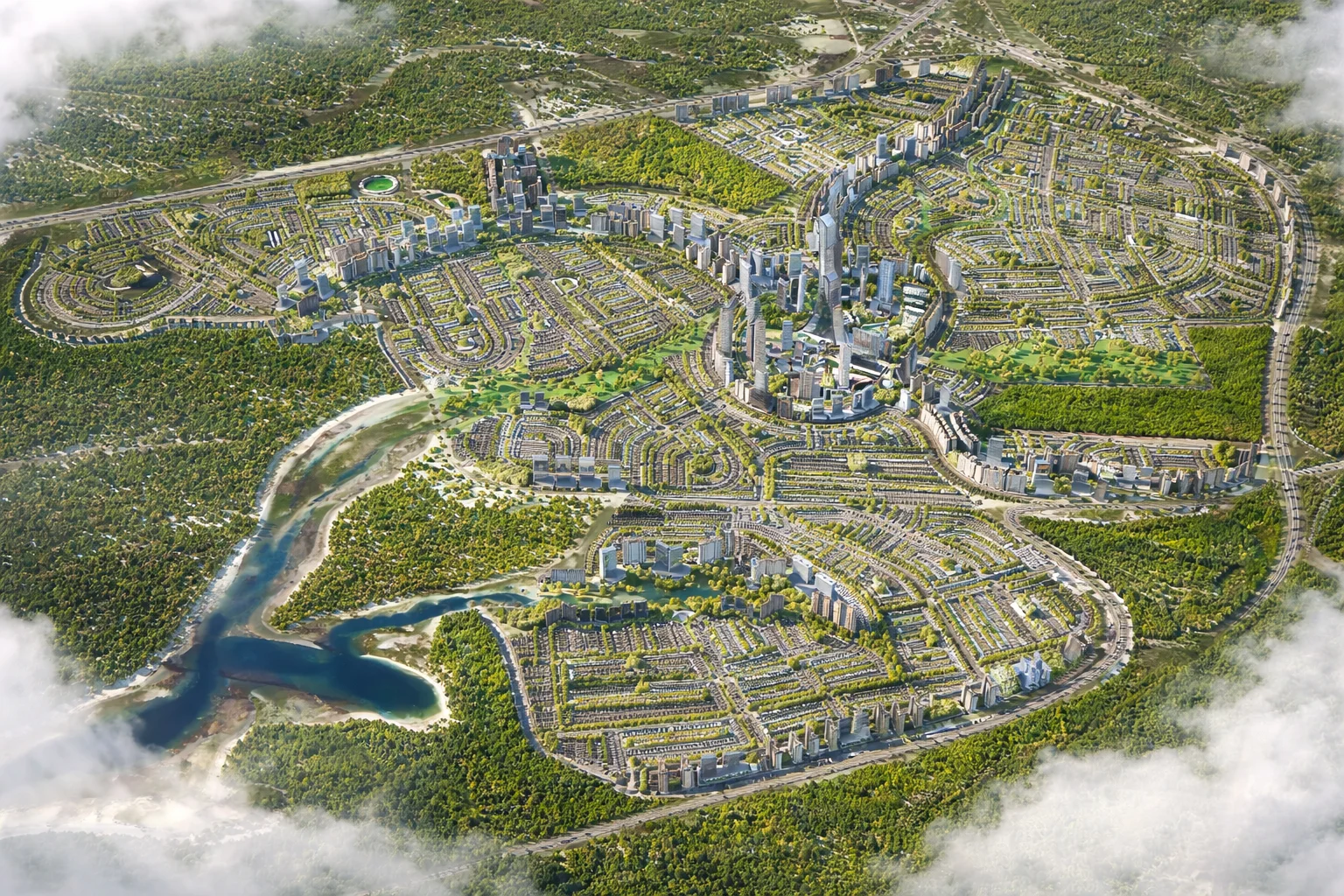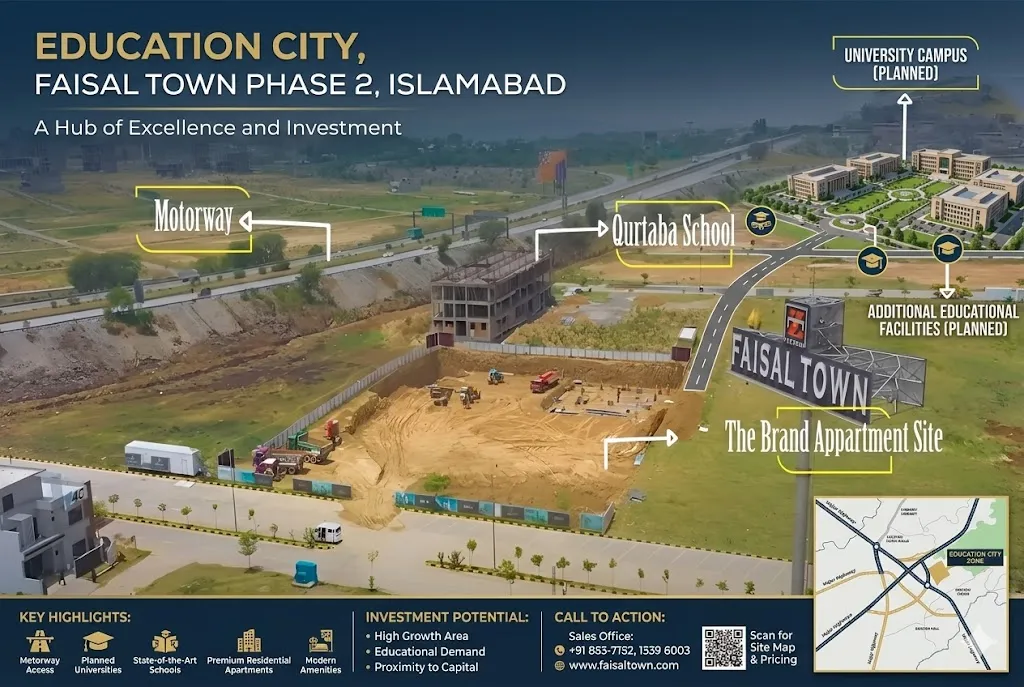
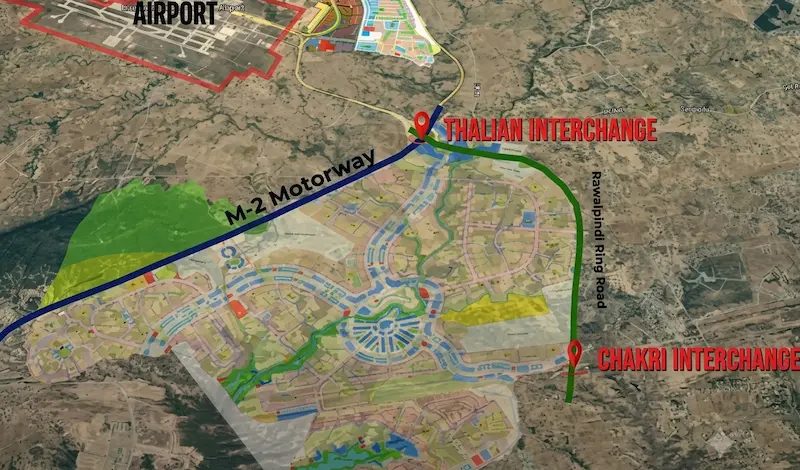
The Rawalpindi Ring Road is one of the biggest road projects in the twin cities and Faisal Town Phase 2 sits closer to it than almost any other housing society in the region. As of mid-2026, the road has reached 85% physical completion, with asphalt already laid across most of its 38.3km route. For buyers who’ve been watching FT2, that progress is worth understanding properly not just as a location talking point, but in terms of which specific sectors benefit, how access actually changes once the road opens, and what the Ring Road still doesn’t fix. This page covers all of that honestly, without the vague “prices will rise” language that fills most pages on this topic.
What Is the Rawalpindi Ring Road?
Most Pakistani buyers have heard the name, but the actual details of what the Ring Road is and what it does are worth knowing before connecting it to any housing society. The Rawalpindi Ring Road is a six-lane controlled-access highway designed to move traffic around the outer edge of Rawalpindi rather than through the city center the same way a bypass works, but on a much larger scale.
It links the GT Road on one end to the M-2 Motorway on the other, creating a continuous outer loop that connects multiple major roads without forcing traffic through Rawalpindi’s already congested urban streets. The two sections below cover the actual route and the five interchanges that connect it to the surrounding road network.
The 38.3km Route From GT Road to M-2 Motorway
The Ring Road starts at Banth Mor on GT Road (N-5) near Rawat and ends at the Thalian Interchange on the M-2 Lahore-Islamabad Motorway. Along the way it passes through Chakbeli Road, Adiala Road, and Chakri Road before reaching Thalian. The total length is 38.3km built as a six-lane expressway with overpasses, underpasses, bridges, and service roads running alongside the main carriageway.
Five Interchanges and Who Manages the Project
| Interchange | Location | Key Connection |
| Banth Interchange | GT Road N-5, near Rawat | Starting point connects to main GT Road |
| Chak Beli Khan Interchange | Chak Beli Khan Road | Connects rural Rawalpindi to the highway |
| Khasala Interchange | Adiala Road | Links Adiala Road residential corridor |
| Chakri Road Interchange | Chakri Road | Connects to Chakri Road housing cluster |
| Thalian Interchange | M-2 Motorway | Western end connects to motorway and airport |
The project is managed by the Rawalpindi Development Authority (RDA). Physical construction was carried out by the Frontier Works Organization (FWO), with the route designed by Turkish firm Botek JV and feasibility conducted by NESPAK. The total project cost runs into tens of billions of rupees, with a separate PC-1 of Rs. 4.8 billion approved specifically for the Thalian Interchange component.
Where Does the Ring Road Stand Right Now? (2026 Update)
This is where most pages covering the Ring Road fall short they either use outdated completion dates or give vague “coming soon” language without telling you what’s actually been done and what hasn’t. The honest picture as of mid-2026 is that Phase 1 is very close to done, but one key component the Thalian Interchange is a separate, later-stage project. And Phase 2 of the Ring Road itself is still genuinely uncertain. The three sections below break this down clearly.
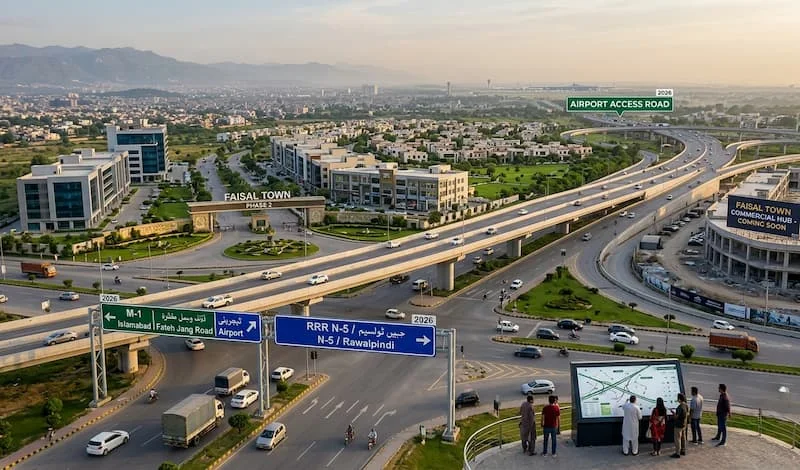
Phase 1 85% Complete, Roads Already Asphalt-Carpeted
As of May 2026, the Rawalpindi Ring Road Phase 1 has reached approximately 85% physical completion. Asphalt carpeting has been laid across most of the 38.3km route, and the revised completion deadline is June 15, 2026. Reports also confirm that the main road may become operational before the full Thalian Interchange is completed meaning traffic could begin using the Ring Road corridor even while some infrastructure work continues. The FWO has been managing active construction and the pace of progress has visibly accelerated compared to earlier years when the project stalled repeatedly.
| Milestone | Status as of May 2026 |
| Total length | 38.3km |
| Physical completion | ~85% |
| Asphalt carpeting | Completed across most of the route |
| Revised deadline | June 15, 2026 |
| Early opening possibility | Confirmed main road may open before full interchange completion |
Thalian Interchange Approved but Built in Phase 2
The Thalian Interchange is a separate component from the main Ring Road carriageway and it’s the interchange that matters most for Faisal Town Phase 2 since it sits at the western end of the Ring Road where FT2 is located. A PC-1 worth approximately Rs. 4.8 billion has been approved for this interchange, but it’s planned to be constructed in Ring Road Phase 2 rather than Phase 1. This means the Ring Road’s main lanes may open first while the Thalian Interchange itself is still being built something buyers comparing FT2’s Ring Road access should factor in rather than assuming full interchange functionality from day one.
What’s Still Uncertain Ring Road Phase 2 and the Motorway Merger Alternative
Phase 2 of the Ring Road which would extend the route further and connect to CPEC and the GT Road near Sangjani is genuinely uncertain as of 2026. Two competing plans are under consideration:
- Full Phase 2 extension build a new road alignment extending the Ring Road beyond Thalian, requiring significant land acquisition along a roughly 500-metre wide corridor
- Motorway merger alternative instead of building a new road, merge Ring Road traffic onto the M-2 Motorway and widen the motorway lanes to handle the additional load
Some officials have recommended the motorway merger specifically to avoid the large-scale land acquisition that a full Phase 2 extension would require. A feasibility study commissioned at approximately Rs. 52 million was underway to assess both options. Which plan gets approved affects how the corridor around Thalian and Faisal Town Phase 2 develops long-term and it’s honest to say that nobody knows the final outcome yet.
Why Faisal Town Phase 2 Benefits From TWO Interchanges
Most coverage of the Rawalpindi Ring Road and Faisal Town Phase 2 focuses on one thing the Thalian Interchange. That is understandable, since Thalian is FT2’s main entry point and the interchange that sits closest to the society’s gate. But it tells only half the story.
Faisal Town Phase 2 is the only major housing society in this corridor that connects to the Ring Road at two separate interchanges Thalian on the western end and Chakri Road roughly in the middle of the route. No competitor page explains this clearly, and most do not mention Chakri at all. That omission matters because the two-interchange advantage changes the practical connectivity picture significantly not just for residents commuting daily, but for the commercial zones within FT2 that depend on traffic arriving from multiple directions.
Thalian Interchange Direct M-2 Motorway Connection
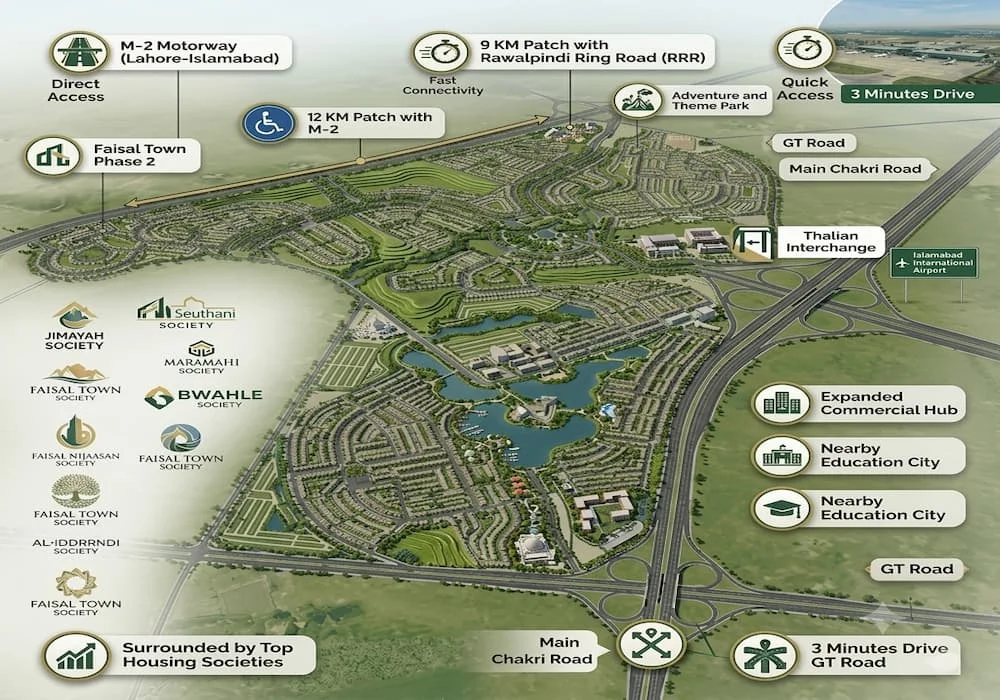
The Thalian Interchange sits at the western terminus of the Ring Road, where it meets the M-2 Lahore-Islamabad Motorway. For Faisal Town Phase 2, this is the primary connection point the society’s main entrance is positioned directly adjacent to Thalian, giving residents access to the M-2 without passing through any urban congestion. Once the interchange is fully operational, travel toward Islamabad’s airport corridor, the Motorway, and onward to Lahore becomes significantly more direct than current GT Road routing. The PC-1 worth approximately Rs. 4.8 billion approved for this interchange confirms it is a planned government priority though construction falls under Ring Road Phase 2 rather than the current Phase 1 works.
Chakri Road Interchange The One Most Competitor Pages Miss
Chakri Road Interchange sits further east along the Ring Road route and it provides a second access point into Faisal Town Phase 2 from a completely different direction. Where Thalian connects FT2 to the M-2 and the airport corridor, Chakri connects it toward Rawalpindi’s southern and eastern zones, including areas that Thalian traffic cannot serve without going around.
For residents coming from Rawalpindi’s industrial areas, Wah, Taxila, or the GT Road eastern belt, Chakri is the more direct route. This second access point is what makes FT2’s Ring Road position genuinely different from societies that sit near just one interchange and it is almost entirely absent from competitor coverage.
What Two Interchanges Mean Practically for Residents
For residents, two interchanges mean you are not entirely dependent on a single access point. If Thalian Interchange construction causes delays or congestion during Phase 2 works, Chakri Road provides an alternative route in and out of the society. Daily commutes toward different parts of Rawalpindi and Islamabad can be optimized based on which interchange is faster on a given day.
For FT2’s commercial zones particularly the CBD and the Commercial District West two interchanges mean traffic arriving from two separate directions rather than one. A commercial area accessible from both Thalian and Chakri has a larger effective catchment area than one accessible from a single point, which is a meaningful factor in how commercial plots along the 365-foot boulevard and the CBD zone perform once the society reaches operational density.
Which Faisal Town Phase 2 Sectors Benefit Most From Ring Road Access?
Not every block within Faisal Town Phase 2 benefits equally from the Ring Road. The society covers a large footprint, and the interchanges at Thalian and Chakri do not serve every sector with the same proximity or directness. Three zones within FT2 stand out as the clearest beneficiaries one sits directly alongside the Ring Road corridor, one group occupies the outer western edge closest to both interchanges, and one benefits not from proximity but from the commercial traffic the Ring Road will route through the society.
Sector X (Ring Road Executive District) Sits Directly Alongside the Ring Road
Sector X carries a specific designation within the FT2 master plan the Ring Road Executive District. This is not a marketing label applied after the fact. The sector was planned and positioned with the Ring Road alignment in mind, which is why it sits directly alongside the corridor rather than simply near it. Plots in Sector X have the most immediate physical relationship with the Ring Road of any residential sector in the society. Once the Ring Road becomes operational, Sector X residents will have the shortest possible internal distance between their homes and the interchange network without crossing through other blocks or navigating the society’s main boulevard first.
Western Outer Sectors K, L, and the Commercial District West
Sectors K and L occupy the outer western zones of Faisal Town Phase 2 the parts of the society that sit geographically closest to both the Thalian and Chakri interchange areas. These sectors currently feel more peripheral than the Model Block or the CBD zone, partly because their Ring Road access does not yet function as a practical advantage. Once the Ring Road is operational, that peripheral positioning reverses.
Blocks that were further from the main entrance become well-connected from the Ring Road side, and the Commercial District West which sits alongside this outer zone gains direct commercial traffic from vehicles using Chakri and Thalian rather than depending solely on internal society footfall.
The CBD and Commercial Zones Ring Road Traffic Means More Footfall
The CBD’s Ring Road benefit works differently from the residential sectors. It is not about proximity the CBD sits deeper within the society layout rather than along the Ring Road edge. The benefit is about traffic volume and origin diversity. When the Ring Road is fully operational, vehicles arriving at FT2 from Thalian and Chakri will enter the society’s main boulevard network before reaching the CBD. That means the commercial district receives traffic from two external directions rather than only from residents already inside the society.
For hotels, shopping centers, corporate offices, and the other institutional uses the CBD is zoned for, a wider incoming traffic base is a direct commercial advantage one that does not depend on FT2’s internal residential occupancy reaching any particular threshold first.
Faisal Town Phase 2 vs Other Ring Road Beneficiary Societies
The Rawalpindi Ring Road benefits multiple housing societies along its 38.3km route and being honest about where Faisal Town Phase 2 ranks among them is more useful to a buyer than simply claiming FT2 wins by default. Four societies are most frequently discussed in this context: Rudn Enclave, Capital Smart City, DHA Phase 3, and FT2 itself. Each benefits differently depending on where it sits relative to the interchanges and what it is trying to achieve as a project.
| Society | Ring Road Relationship | Key Advantage | Honest Limitation |
| Rudn Enclave | Sits directly on Ring Road corridor | Most direct beneficiary planned around Ring Road | Developer credibility questions verify independently |
| Capital Smart City | Has its own dedicated interchange | Ring Road built into master plan from day one | Further from Rawalpindi’s urban core |
| DHA Phase 3 | Benefits from Ring Road reducing GT Road congestion | Strong developer credibility, established brand | Not positioned at an interchange directly |
| Faisal Town Phase 2 | TWO interchanges Thalian and Chakri | Maximum interchange access of any society on the route | Thalian Interchange itself is Phase 2, not yet built |
Rudn Enclave
is the most direct Ring Road beneficiary of any society in this comparison it was literally planned alongside the Ring Road corridor, and its plots derive a significant portion of their value from that physical alignment. If Ring Road proximity is the single deciding factor for a buyer, Rudn Enclave has the strongest claim to that positioning. The honest caveat is that developer credibility and NOC status for Rudn Enclave should be independently verified before any investment decision proximity to infrastructure does not substitute for legal standing.
Capital Smart City
took a different approach rather than sitting alongside the Ring Road, it secured its own dedicated interchange within the master plan from the beginning. That decision means CSC’s Ring Road benefit is built into the society’s infrastructure rather than dependent on how close plots happen to be to the corridor. The trade-off is location CSC sits further from Rawalpindi’s established urban core than FT2, which matters for buyers whose daily routines are anchored in the twin cities rather than the wider motorway corridor.
DHA Phase 3
benefits from the Ring Road in a more indirect way. The Ring Road reduces congestion on GT Road and the routes connecting Rawalpindi’s outer zones which improves overall accessibility for DHA Phase 3 without the project sitting at an interchange directly. DHA’s brand credibility and track record are well established, which means buyers here are weighing infrastructure indirectly rather than Ring Road positioning as a primary driver.
Faisal Town Phase 2
sits in a specific position in this comparison it has the highest number of interchange connections of any society on the route, but the most important of those interchanges, Thalian, is a Phase 2 project with its own timeline and budget rather than part of the currently completing Phase 1 works. The TWO interchange advantage is real and will matter once both are operational. The honest framing for a buyer is that FT2’s Ring Road benefit is partially available now through Chakri, and more fully available once the Thalian Interchange Phase 2 construction completes on a timeline that has not yet been officially confirmed.
What Ring Road Completion Does NOT Change
Every page covering the Ring Road and Faisal Town Phase 2 focuses on what the road adds. None of them cover what it does not change and for a buyer making a financial decision, that omission is a problem. Infrastructure improvement is real and meaningful, but it operates in a specific lane. It does not resolve the other variables that determine whether a plot purchase is sound.
The NOC status remains what it is.
The Rawalpindi Ring Road completing on schedule does not affect Faisal Town Phase 2’s regulatory standing with RDA. The two are entirely separate processes managed by separate government bodies on separate timelines. FT2’s NOC application is with RDA and its progress depends on the developer’s compliance with RDA’s specific requirements road completion 38 kilometres away has no bearing on that outcome. Buyers who are waiting for Ring Road completion as a signal to invest should understand that NOC status is the more fundamental legal question, and it needs to be confirmed directly with RDA or the sales team independently of any infrastructure news.
Possession timelines are not accelerated by the Ring Road.
When your plot receives possession depends on the developer’s internal development schedule for your specific sector not on external infrastructure around the society. Ring Road completion may increase demand and add pricing pressure, but it does not move the developer’s possession delivery forward. Sector-level development, utility connections, and RDA compliance milestones are what determine when you can build. A buyer expecting Ring Road completion to trigger possession availability is misreading how the two timelines interact.
Price appreciation is not guaranteed.
This is the most important point to state plainly. Infrastructure projects historically correlate with property value increases in Pakistan and the Ring Road is a legitimate positive signal for the FT2 corridor. But correlation is not a guarantee. Plot values depend on developer execution, occupancy rates, broader economic conditions, and buyer sentiment none of which the Ring Road controls. Societies with strong infrastructure access and weak developer delivery have underperformed in Pakistan’s real estate market before. The Ring Road improves one variable in a multi-variable equation. Buyers should evaluate the full equation rather than treating infrastructure news as a substitute for due diligence on the project itself.