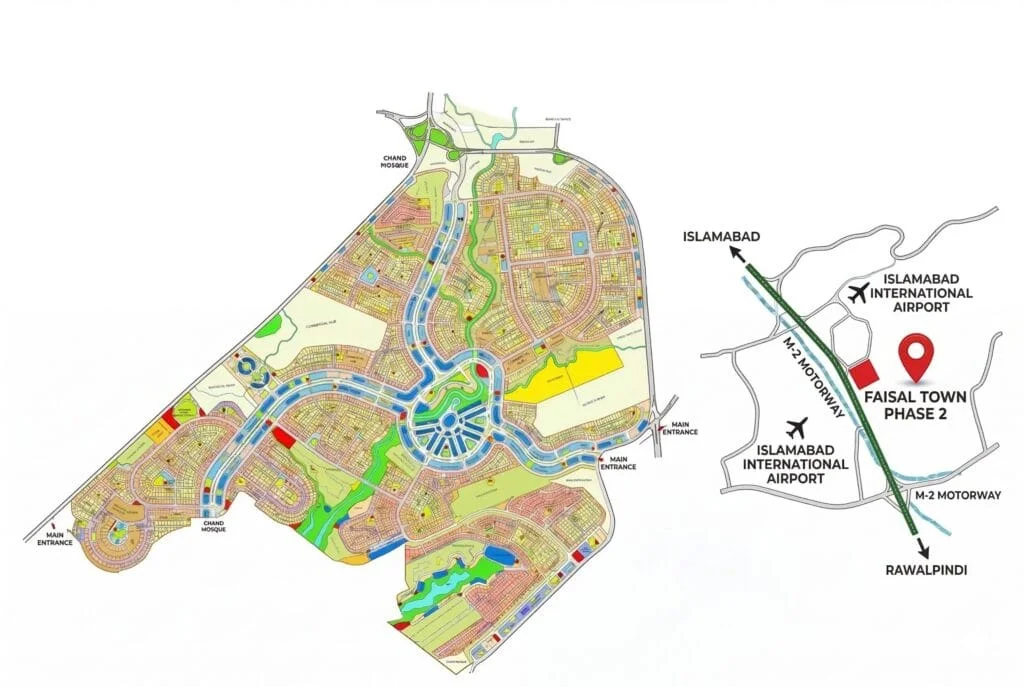

If someone is offering you a plot file in Faisal Town Phase 2, whether it’s a resale file or one being handed over by a dealer, the file itself needs to be checked out before any money changes hands. A genuine file and a risky one can look identical on paper, and the only way to tell them apart is to verify the details directly rather than take the seller’s word for it. This guide walks through exactly what to check, who to check it with, and the warning signs that mean you should pause before paying.
Steps to Verify a Plot File
Before paying for a plot file in Faisal Town Phase 2, do this:
- Confirm the registration number directly with the developer; don’t just trust the seller’s copy
- Ask the seller to log into the official member portal and show the plot number and payment ledger
- Match the name on the file to the person you’re dealing with
- Confirm the file isn’t already sold or flagged
- Separately, check the project’s current NOC status, since that’s project-wide, not file-specific
Skipping any of these is where most buyers get into trouble.

Why File Verification Matters Before You Pay
A plot file often changes hands more than once before it reaches you, and details can get misrepresented along the way: payment history, ownership, or whether the file is still active. Verifying isn’t about assuming the seller is dishonest; it’s about confirming the file matches the developer’s own records. A genuine seller won’t mind you checking. One who resists usually is the risk. Since a resale file carries real money and often a thinner paperwork trail than a direct booking, a few checks upfront cost you minutes and protect you from a much bigger loss.
What Information You Need From the Seller
Get three things from the seller before you verify anything:
- The registration number
- Their CNIC
- The original booking receipt or allotment letter
Photocopies with no way to confirm them against the developer aren’t enough. If the seller can’t produce these, that’s a signal on its own. You don’t need every document on day one, but you need all three before any payment. Having this ready also speeds up verification, since you’re checking it directly against the developer’s records rather than assembling it after money has already moved.

How to Verify a Plot File:
Once you have the seller’s basic information, verification comes down to four checks, each confirming a different part of the file. None of them require a lawyer or a formal process at this stage, just direct contact with the consultant instead of relying on the seller’s word.
| Check | What It Confirms |
| Registration number with the developer | The file actually exists in the developer’s records |
| Official member portal | The file is active and shows real payment history |
| Seller is the registered owner | The name on the file matches who you’re negotiating with |
| File isn’t already sold or duplicated | The file is genuinely available to buy |
Doing them in order also makes sense: confirming the registration number first tells you whether the file exists in the developer’s records at all before you spend time on the other checks. Skipping straight to payment because a file “looks right” is exactly how buyers end up with a problem they only discover later.
Confirm the Registration Number With the Developer
Call or visit the developer’s office directly and ask them to confirm the registration number on the file. Don’t rely on a number the seller reads out to you, get it from the actual documents and check it yourself. If the developer has no record of that number, or the details don’t match what the seller told you, stop there.
Verify Through the Official Member Portal
Ask the seller to log into the official member portal while you’re present, or share a screenshot showing the plot number, block, and payment ledger. This confirms the file is active and shows the real payment history, not just what the seller claims has been paid.
Confirm the Seller Is the Registered Owner
Check that the name on the file and the CNIC match the person you’re actually negotiating with. If the seller isn’t the registered owner, ask how they’re authorized to sell it, whether through a power of attorney or a documented transfer, and confirm that authorization directly with the developer.
Check the File Isn’t Already Sold or Duplicated
Ask the developer to confirm the file’s current status before you pay. This tells you whether the file has already been sold to someone else or flagged for any reason. It’s a quick check, and it’s the one step that directly protects you from paying for a file that isn’t actually available.
Checking NOC and Legal Status
File verification and NOC status are two separate checks, and it’s worth doing both rather than assuming one covers the other. As of 2026, Faisal Town Phase 2’s NOC is under process with the Rawalpindi Development Authority (RDA), not yet approved. This applies to the project as a whole, not to individual files, so a genuine, verified plot file can still sit inside a project where NOC approval is pending.
That’s not necessarily a reason to walk away, but it is something to factor into your decision separately from file verification. Confirm current NOC status directly through RDA rather than relying on what a seller or dealer tells you, since this detail changes over time and gets misquoted often. If a legally clear title matters more to you than an earlier entry price, this is the point where that trade-off becomes real.

Red Flags That Signal a Risky File
A few patterns show up repeatedly in problem sales, and none of them require special expertise to notice:
- Pressure to pay quickly, before you’ve had time to verify anything
- A seller who avoids showing original documents, or only offers photocopies with no way to confirm them
- Pricing well below what similar files are going for
- The name on the file doesn’t match the person you’re dealing with, and they can’t explain their authorization clearly
None of these signs alone proves something is wrong, but seeing more than one together is a strong reason to slow down and verify everything before paying anything.
Should You Involve a Lawyer or Consultant?
For most standard file verifications, working directly with the developer covers what you need. But if the seller isn’t the registered owner, if there’s a power of attorney involved, or if you’re buying from abroad and can’t easily follow up in person, a lawyer or a property consultant familiar with Faisal Town Phase 2 is worth the cost.
They can confirm documents are legally valid, not just present, and can follow up with the developer on your behalf if something doesn’t add up. This matters more for overseas buyers, since verifying details remotely is harder without someone physically able to check records and meet the seller if needed.
Frequently Asked Questions
Conclusion:
Verifying a plot file takes a few phone calls and a short conversation with the developer. Skipping it can cost you the full price of the plot. Confirm the registration number, check the file through the official member portal, make sure the seller is who they claim to be, and separately verify the project’s NOC status before you commit. None of this slows down a genuine transaction, and any seller with nothing to hide will have no problem with you taking these steps. If something doesn’t check out cleanly, that’s your answer.
Not sure how to verify a specific file, or want help confirming details directly with the Consultant? Get in touch with our team before you make any payment.