
Buying a plot in Pakistan from Saudi Arabia is easy. Staying updated on it afterward is where most overseas buyers get stuck. You paid your down payment, signed the booking form, and then flew back to Riyadh, Jeddah, or Dammam. Now what?
This is the question a lot of Saudi-based Pakistanis ask after booking a plot in Faisal Town Phase 2. You want to know if your payment was received, how much you still owe, and when your next installment is due. You don’t want to call Pakistan every time and hope someone picks up.
The good news is that track Faisal Town Phase 2 booking from Saudi Arabia doesn’t have to involve guesswork or repeated phone calls. There are a few reliable ways to check your status, confirm your payments, and stay on top of your file without being physically present in Islamabad.
Why Booking Tracking Matters for Saudi-Based Buyers
When you book a plot and then leave the country, the file doesn’t manage itself. Payments need to be recorded, receipts need to reach you, and someone needs to confirm your ledger matches what you actually paid. If you’re sitting in Saudi Arabia, you can’t just walk into an office to sort out a mismatch.
This gap is where a lot of overseas buyers run into trouble, not because the project is unsafe, but because nobody explained how to stay connected to their own file after booking. A missed installment reminder or an unconfirmed payment can turn into a bigger problem later, especially if it’s discovered months after the fact.
Tracking your booking regularly means you catch issues early, and you go into every installment cycle knowing exactly where you stand instead of relying on memory or old screenshots.
Managing a Pakistani Plot from Riyadh, Jeddah, or Dammam
Time zones, work schedules, and limited office hours make it hard to reach Pakistan-based staff when you need them. A call that would take five minutes in person can turn into days of back-and-forth messages. Saudi Pakistanis often end up depending on a family member or friend in Pakistan just to confirm basic details, which isn’t always practical or reliable.
Common Concerns Saudi Pakistanis Have After Booking
Most buyers want the same things:
- Proof that their payment reached the right account
- A clear picture of what’s left to pay
- Confirmation that their personal details are correctly recorded
- Assurance they won’t miss an installment deadline simply because a reminder never reached them abroad
Faisal Town Phase 2 at a Glance
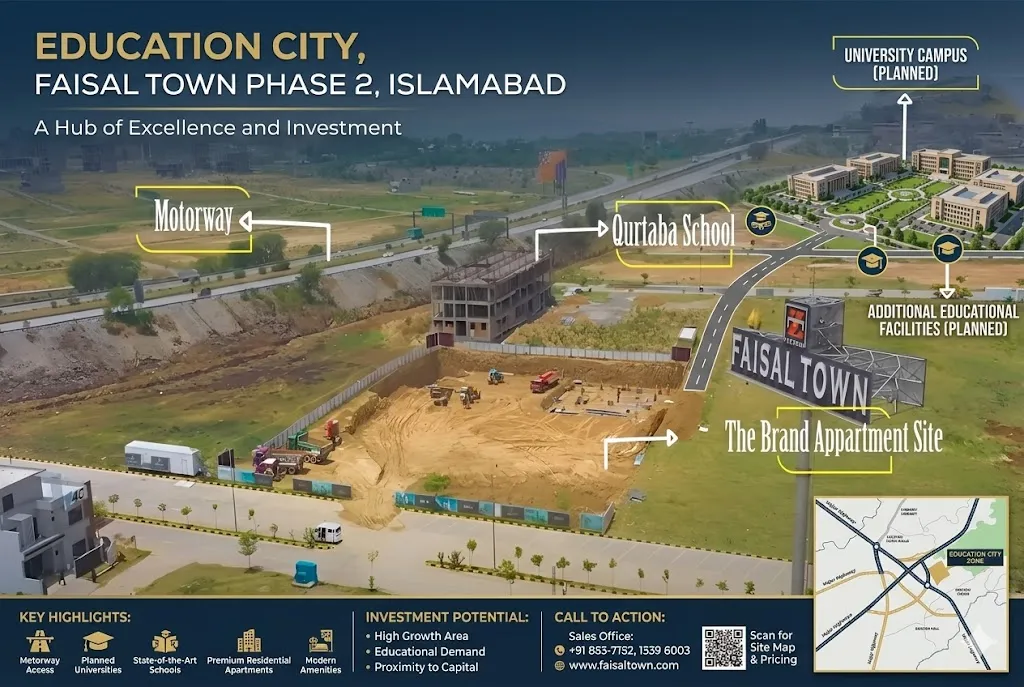
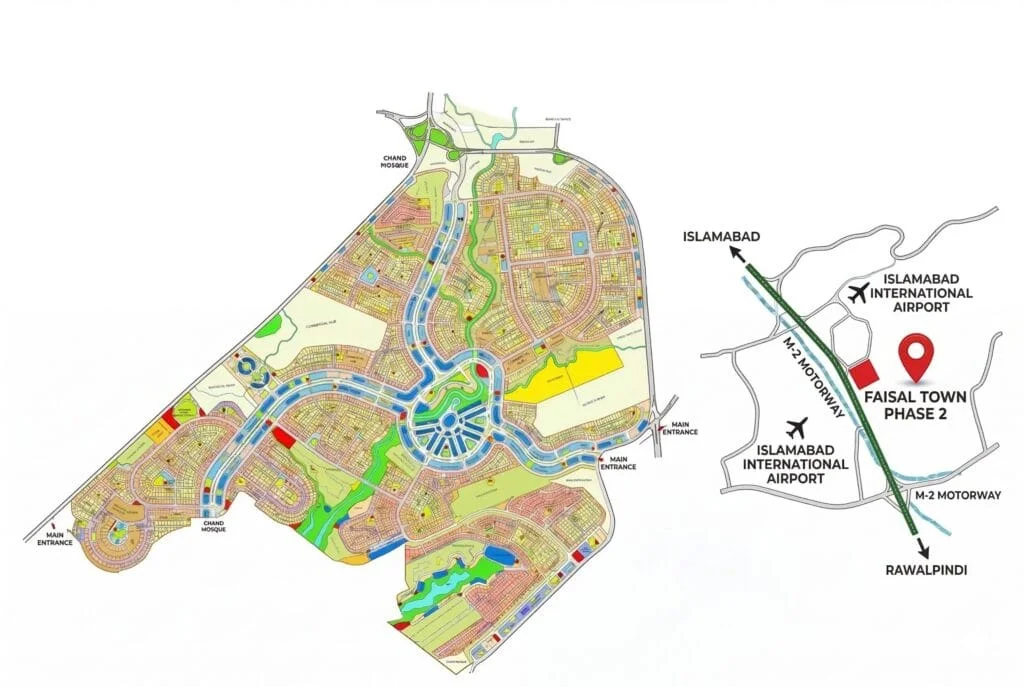
Faisal Town Phase 2 is a housing project located near the Thalian Interchange, close to Islamabad. It’s developed by Zedem International, a company associated with Chaudhry Abdul Majeed, who has also worked on other housing projects in the region. The project includes a mix of residential sectors, a dedicated overseas block, and commercial areas.
For buyers based outside Pakistan, the project is often discussed alongside its remote-buying process, since a large share of interest comes from Pakistanis living abroad. Before booking or tracking anything, it helps to understand the basics of the project itself; where it’s located, who developed it, and why it draws attention from overseas buyers specifically.
This section is meant as a quick orientation, not a full project review. If you’re already familiar with Faisal Town Phase 2, you can move ahead to the tracking methods.
| Detail | Information |
| Location | Near Thalian Interchange, Islamabad |
| Developer | Zedem International Private Limited |
| Key Sponsor | Chaudhry Abdul Majeed |
| Approving Authority | Rawalpindi Development Authority (RDA) |
| Focus Areas | Residential, Overseas Block, Commercial |
Project Location and Developer Background
Faisal Town Phase 2 sits near the Thalian Interchange on the outskirts of Islamabad. The project is developed by Zedem International Private Limited. Buyers considering the project should confirm current NOC and approval status directly with the Rawalpindi Development Authority, since regulatory status can change over time.
Why Overseas Pakistanis Are Investing in Faisal Town Phase 2
A number of overseas Pakistanis choose Faisal Town Phase 2 because it includes a section built specifically for buyers living abroad. Many also see it as a way to hold property in Pakistan for family use later, or as a long-term asset tied to their home country while they continue working overseas.

Ways to Track Your Faisal Town Phase 2 Booking Status
There isn’t just one way to check where your booking stands. Depending on what’s available to you and how comfortable you are with each method, you can choose the option that fits your situation best. Some buyers prefer doing everything online through a member portal. Others feel more confident speaking directly to a person: a dealer, a WhatsApp contact, or someone on a support line.
The methods below aren’t mutually exclusive. Many Saudi-based buyers use two or three of them together, for example, checking the portal for numbers, then confirming anything unclear with their dealer directly. What matters most is that you’re checking consistently, not just once after booking and never again.
- Member Portal: self-service, fastest option
- Authorized Dealer: direct file access, personal explanation
- WhatsApp: quick, time-zone-friendly communication
- Phone or Email Support: documented, formal record
Using the Faisal Town Member Portal (Online Ledger & Login)
If a member portal is available for your booking, it lets you log in and see your payment history, dues, and account details without needing to contact anyone. This is usually the fastest way to check your status, since it doesn’t depend on office hours or someone being available to answer your call. Make sure your login details and registered contact information are correct before you need them.
Tracking via Authorized Dealer or Sales Representative
Your dealer or sales representative is often the person who has direct visibility into your file. If you booked through an authorized dealer, they can usually confirm your payment status, upcoming dues, and any documentation issues. This route works well when you want a direct answer from someone who already knows your case.
Checking Status via WhatsApp Communication
WhatsApp is a practical option for Saudi-based buyers because it doesn’t rely on matching business hours the way a phone call does. You can send your query, attach payment proof if needed, and follow up later without repeated calling. Just make sure you’re messaging a verified, official contact rather than an unknown number claiming to represent the project.
Verifying Booking Through Phone or Email Support
For buyers who prefer a documented trail, email works well since it keeps a written record of every question and answer. A phone call can still be useful for quick confirmations, but try to follow up important calls with an email or message summarizing what was discussed, so you have something to refer back to later.

Step-by-Step Guide: Tracking Your Booking from Saudi Arabia
Checking your booking status doesn’t need to be complicated once you know the order to do things in. Most delays happen because buyers try to check their file without the right details on hand, or they jump straight to calling someone before checking what’s already available online.
The steps below follow a simple order: gather your details first, check the portal, confirm what you see, get proof in writing, and then set yourself up so you don’t have to repeat this process manually every quarter. You don’t need to do all five steps every single time, but going through them once, properly, saves you a lot of back-and-forth later.
- Gather your booking reference and CNIC/NICOP details
- Log into the member portal from abroad
- Confirm ledger entries, dues, and payment history
- Download or request digital receipts
- Set reminders for upcoming installments
This works whether you’re checking your file for the first time after booking or doing a routine check before your next installment is due.
Step 1: Gather Your Booking Reference and CNIC/NICOP Details
Before contacting anyone or logging into anything, have your booking reference number, CNIC or NICOP number, and registered phone number or email ready. These are usually the details needed to pull up your file, whether you’re using a portal or speaking to a representative directly.
Step 2: Log Into the Member Portal from Abroad
If a member portal is available, log in using your registered credentials. You don’t need a Pakistani SIM or local internet connection to access it from Saudi Arabia. If you’ve forgotten your login details, most portals allow you to recover them using your registered email or phone number.
Step 3: Confirm Ledger Entries, Dues, and Payment History
Once logged in, go through your ledger line by line. Check that each payment you made shows up with the correct date and amount. If something looks off, like a missing entry or a wrong figure- this is the point where you’d want to raise it with your dealer or support contact before it becomes a bigger issue.
Step 4: Download or Request Digital Receipts
Save a digital copy of every receipt tied to your payments. If the portal allows downloads, do this after each payment rather than waiting months later. If receipts aren’t available online, request them directly from your dealer or the sales office and keep them in a dedicated folder, ideally backed up to cloud storage as well.
Step 5: Set Reminders for Upcoming Installments
Once you know your installment schedule, set your own reminders a few days before each due date. Don’t rely only on the developer or dealer to notify you, since messages can be missed or delayed. A simple calendar reminder on your phone is often more reliable than waiting for an external alert.
Tracking Methods Compared: Which One Works Best for You
Each tracking method has a different strength, and the right one often depends on what you’re trying to confirm. A portal is usually the quickest for checking numbers yourself. A dealer or representative is better when you need someone to explain a discrepancy. WhatsApp works well for quick, casual follow-ups, while phone or email suits situations where you want a clear record of what was said.
Rather than picking just one method and sticking to it permanently, it helps to match the method to the situation. Routine checks can go through the portal. Anything unusual is worth confirming with a person directly, either through your dealer or official support contact.
Portal vs. WhatsApp vs. Dealer vs. Phone Call
| Method | Best For | Speed | Written Record |
| Member Portal | Self-service ledger and dues check | Fastest | Yes (downloadable) |
| Informal updates, sending payment proof | Fast | Partial | |
| Authorized Dealer | Explaining a discrepancy on your file | Moderate | No (unless followed up in writing) |
| Phone Call | Urgent matters | Fast | No (follow up with email/message) |
| Formal, documented communication | Slower | Yes |
Documents Saudi-Based Buyers Should Keep Ready
Staying organized with your documents makes tracking far easier, especially when you’re managing everything from outside Pakistan. If a question comes up about your booking, having the right paperwork ready means you can resolve it in one conversation instead of several.
This matters more for overseas buyers than local ones, simply because getting a missing document reissued or re-verified takes longer when you’re not in the country. A scanned copy sitting in your email or cloud drive can save you weeks of delay if something needs to be confirmed quickly.
Keep digital copies of each of the following, saved somewhere you can access from your phone:
- NICOP and nominee details
- Booking form and allotment letter
- Payment receipts and bank transfer records

NICOP and Nominee Details
Your NICOP is typically the main identification document used for your booking as an overseas Pakistani. If you’ve nominated someone in Pakistan to act on your behalf for certain matters, keep their CNIC or NICOP details on file as well, along with any nomination paperwork submitted at booking.
Booking Form and Allotment Letter
Your original booking form and allotment letter confirm your plot details and booking terms. These are often the first documents requested if there’s ever a dispute or if you need to verify your file with a new representative. Keep both the physical copies, if you have them, and scanned digital versions.
Payment Receipts and Bank Transfer Records
Every payment you make should have a matching receipt and a bank transfer record on your end. Keep these together in date order, since this is usually the fastest way to resolve any mismatch between what you paid and what appears on your ledger.
Payment Plans and Installment Structure for Overseas Buyers
Understanding your payment plan makes tracking far more straightforward, since you already know what to expect at each stage. Overseas buyers typically pay a down payment followed by installments spread across a set period, though the exact structure depends on the plot size and category booked.
Knowing your installment amount and due dates in advance means you can plan your bank transfers ahead of time instead of scrambling close to the deadline. It also makes it easier to spot a mismatch if your ledger ever shows a different figure than what you were expecting to pay.
Down Payment and Quarterly Installment Overview
Most payment plans start with a down payment, followed by quarterly installments spread over a few years. The exact percentage and number of installments depends on your specific plot category, so it’s worth confirming these figures directly with your dealer or the current payment plan document rather than assuming they’re the same across all plot sizes.
How to Match Your Saudi Bank Transfer with Your Ledger Entry
When you send a payment from a Saudi bank, note the transfer date, amount, and reference number before sending it. Once the payment reflects on your ledger, compare these details against what you sent. If the amount or date doesn’t match, or the entry doesn’t appear at all after a reasonable processing time, follow up with your dealer using your transfer receipt as proof.
Avoiding Fraud While Tracking or Managing Your Booking Remotely
Managing a property file from outside Pakistan comes with a specific risk: you can’t always verify things in person, which makes it easier for someone dishonest to take advantage of the distance. This doesn’t mean remote management is unsafe, but it does mean you need to be more careful about who you’re communicating with and where your money is going.
Most fraud attempts targeting overseas buyers follow a similar pattern. Someone poses as an official representative, asks for payment to an account that isn’t verified, and creates urgency so you don’t stop to check. Being aware of this pattern is often enough to avoid it entirely.
Verifying Official Contacts and Bank Accounts
Before sending any payment, confirm the bank account details directly with your dealer or the developer’s official contact, even if you’ve paid before. Cross-check phone numbers and email addresses against the ones you originally registered with, and avoid relying only on WhatsApp messages from numbers you haven’t verified elsewhere.
Red Flags to Watch for as a Saudi-Based Investor
Be cautious if someone:
- Asks you to send money to a personal account instead of the official company account
- Pressures you to pay immediately without time to verify details
- Contacts you out of nowhere claiming to have information about your file
Genuine representatives won’t discourage you from double-checking anything before you pay.
Benefits of Remote Booking Management for Overseas Pakistanis
Managing your Faisal Town Phase 2 file from Saudi Arabia isn’t just a workaround — for many overseas buyers, it actually works better than the old way of relying on someone back home to handle everything. Once you know how to check your own file, you stop depending on other people’s schedules and memory.
24/7 Access Across Time Zones
One of the biggest advantages of tracking your booking online is that it doesn’t care what time it is in Islamabad. Whether you’re checking your ledger after Fajr in Riyadh or during a break at work in Dammam, a member portal or saved documents are available whenever you have a few minutes, since office hours on one side often don’t line up with free time on the other.
Reducing Dependence on In-Person Visits
Before remote tracking became practical, a lot of overseas buyers had to lean on a relative or friend in Pakistan to physically visit an office just to confirm a payment or collect a receipt. That’s not only inconvenient for the person doing the favor; it also adds a layer of miscommunication, since details can get lost between what the office says, what your relative understands, and what actually gets relayed back to you. Handling things yourself, even remotely, cuts that chain down to one step.
What to Do If You Face Issues Tracking Your Booking
Even with a system in place, things don’t always go smoothly. A login might not work, a payment might not show up, or a figure on your ledger might not match what you sent. Knowing what to do in these moments saves you from unnecessary stress.
Contacting Customer Support from Saudi Arabia
If you can’t access your account or something on your file looks wrong, reach out to official customer support directly rather than guessing or waiting it out. Keep your booking reference and CNIC/NICOP details ready before you call or email, since support staff will usually ask for these first. If phone support is hard to reach during Pakistan’s office hours from Saudi Arabia, email is often a more reliable starting point, since it doesn’t require both sides to be available at the same time.
Escalating Unresolved Ledger or Payment Discrepancies
If your first attempt to resolve a discrepancy doesn’t go anywhere, don’t just let it sit. Put your concern in writing, attach your payment proof or transfer record, and ask for a clear timeline on when it will be resolved. If the issue still isn’t addressed after a reasonable follow-up, ask to escalate it to a supervisor or a more senior contact rather than repeating the same request to the same person. Keeping a written trail of every attempt also protects you if the matter needs to be raised more formally later.
Final Thoughts: Staying in Control of Your Investment from Abroad
Distance doesn’t have to mean losing track of your investment. Once you know which tools are available- a member portal, a trusted dealer, WhatsApp, or email— and you build the habit of checking in regularly, managing your Faisal Town Phase 2 booking from Saudi Arabia becomes routine rather than stressful.
The buyers who run into trouble are usually the ones who go quiet for months at a time, not the ones who stay engaged. A little consistency, a few saved documents, and knowing who to verify things with goes a long way toward protecting your investment while you continue building your life abroad.
Frequently Asked Questions
Can I track my Faisal Town Phase 2 booking without visiting Pakistan? Yes. Most buyers manage their entire file: checking dues, confirming payments, and getting receipts, without ever needing to be physically present, as long as they have their booking details and access to a portal, dealer, or support contact.
What details do I need to check my booking status? Your booking reference number, CNIC or NICOP number, and the phone number or email registered at the time of booking are usually enough to pull up your file.
How do I know if a WhatsApp contact is genuine? Verify the number against the one officially listed by the developer or your dealer’s confirmed contact, and avoid sharing payment details with numbers that reach out to you first without prior context.
What should I do if my payment doesn’t show up on the ledger? Give it a reasonable processing window, then contact your dealer or support with your bank transfer details as proof. If it’s still not resolved, escalate the matter in writing.
Is it safe to send installment payments from a Saudi bank account? Yes, as long as you’re transferring to a verified, official account that you’ve confirmed directly with your dealer or the developer, not an account shared only through an unverified message.