If you’re weighing whether to buy in Faisal Town Phase 2 to actually live there, or purely to invest and resell later, you’re not alone. This is one of the most common questions buyers ask before booking a plot. The honest answer isn’t one-size-fits-all. Development stage, NOC status, block choice, and your own timeline all play a role in whether this project suits an end user, an investor, or genuinely works for both. This guide breaks down what matters for each type of buyer, so you can decide based on your actual situation rather than a general sales pitch.
H2: Why This Question Matters Before You Book a Plot
Before you put money into any plot, it helps to know why you’re actually buying it. Some people want a place to build a home and settle down. Others just want their money to grow over the next few years. Faisal Town Phase 2 attracts both types of buyers, but the right choice looks different depending on which group you fall into.
This matters because the same block that works well for an investor might not suit someone who wants to move in soon. A block still waiting on roads and utilities can be a smart long-term bet for one person, and a frustrating wait for another. Mixing up these two goals is one of the most common reasons buyers end up unhappy with a plot that was never wrong for the society, just wrong for their situation.
This guide breaks things down by what you’re actually trying to achieve so that you can match your goal to the right block, payment plan, and timeline in Faisal Town Phase 2.
H3: Two Very Different Buyer Mindsets in Faisal Town Phase 2
An end user usually asks: can I build here soon, and will my family be comfortable? An investor asks a different question: how much will this plot be worth in a few years, and how much risk am I taking to get there. Neither mindset is wrong, but they lead to very different decisions, from which block to pick to how much NOC risk feels acceptable. Knowing which one you are, before you book, saves you from second-guessing later.
H2: Current Development and Possession Status
Before deciding whether Faisal Town Phase 2 fits your goal, it helps to look at where things actually stand on the ground. Development doesn’t happen evenly across a housing society this size. Some sectors move faster because they were launched earlier or sit closer to main access roads, while others are still at the planning and levelling stage. This difference matters more than people realize, because a block with roads and possession already sorted feels very different from one that’s still months or years away from that point.
For someone who wants to live in the society soon, this status is the single most important thing to check before booking. For an investor, it matters too, but differently; earlier-stage blocks often come with lower prices and more room for appreciation as development catches up.

Which Blocks Are Livable or Near-Livable Today
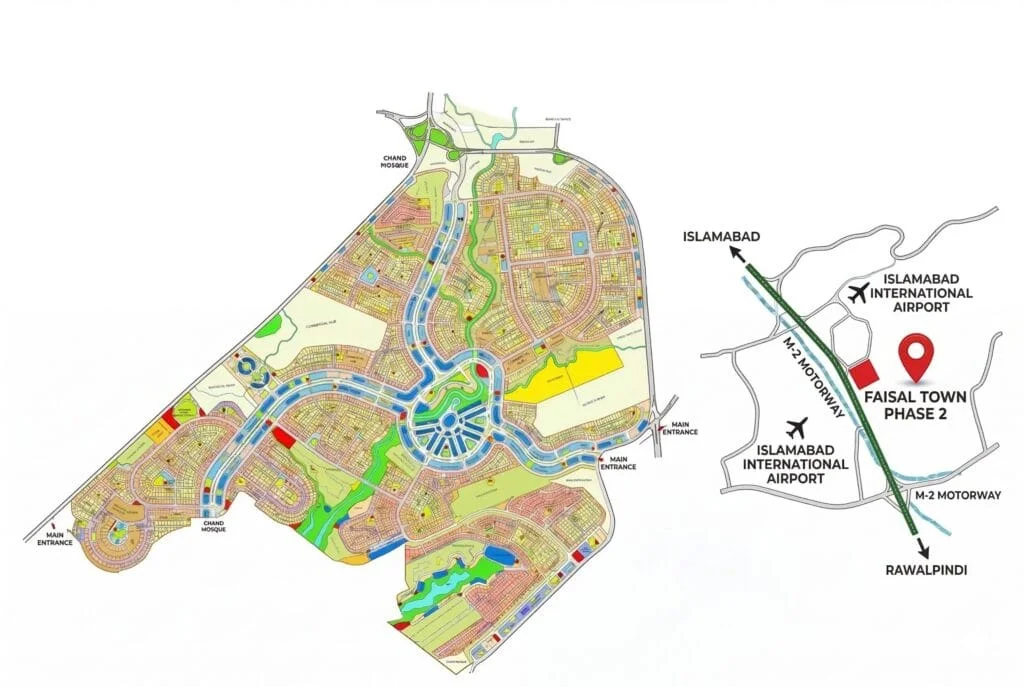
Sector O, also known as the Model Block, is generally considered the most developed part of Faisal Town Phase 2, with roads and basic infrastructure further along than in most other sectors, and possession offered soon after booking in many cases. Before assuming a block is ready for construction, it’s worth confirming a few things directly with the developer:
- Current road and utility status on-site
- Whether possession has actually been handed over, not just promised
- How many plots in the sector are already under construction
This makes Sector O a common starting point for buyers who want to see progress on the ground rather than just a plan on paper
Which Blocks Are Still in Early Development
Several other sectors, including parts of the General Block, N Block, and newer additions like Sector P, are at an earlier stage, with roadwork and utilities still being developed. These blocks usually come with:
- Lower entry prices compared to more developed sectors
- Longer installment plans, easing the upfront burden
- More uncertainty around exact construction timelines
This combination makes them more attractive to investors comfortable waiting out the construction phase, but buyers hoping to build and move in soon should ask specifically about each sector’s timeline rather than assuming all blocks are progressing at the same pace.

Is Faisal Town Phase 2 Good for End Users?
If your goal is to build a home and settle down, Faisal Town Phase 2 can work, but the answer depends heavily on which block you pick. Someone hoping to move in within the next year or two will have a very different experience than someone buying purely for the future. The society is still in a growth phase overall, which means end users need to be more selective and ask more questions than they would in an older, fully settled community.
This doesn’t rule out end users; it just means the decision needs more homework. A family planning to build should look closely at possession status, utility availability, and how far along the specific block is, rather than judging the whole society by its master plan alone. The sections below cover what a realistic timeline looks like, what daily life factors matter most, and where end users should slow down before committing.
What a Family Can Realistically Expect If They Want to Build Soon
Families wanting to build soon should focus on blocks like Sector O, where possession and basic infrastructure are further along compared to newer sectors. Even here, construction usually starts once utilities are confirmed on-site, so it’s worth visiting in person or asking the developer directly about current status rather than relying on marketing materials alone. Blocks still in early development are not a realistic option for anyone hoping to build within the next year.
Daily Life Factors: Schools, Utilities, Commute
Schools, hospitals, and markets are still being developed across most of Faisal Town Phase 2, so families moving in early may need to rely on nearby areas for these needs in the short term. Before moving in, it’s worth checking a few basics block by block:
- Electricity, gas, and sewerage connection status
- Distance to the nearest functioning school or hospital outside the society
- Access roads currently usable for daily commuting
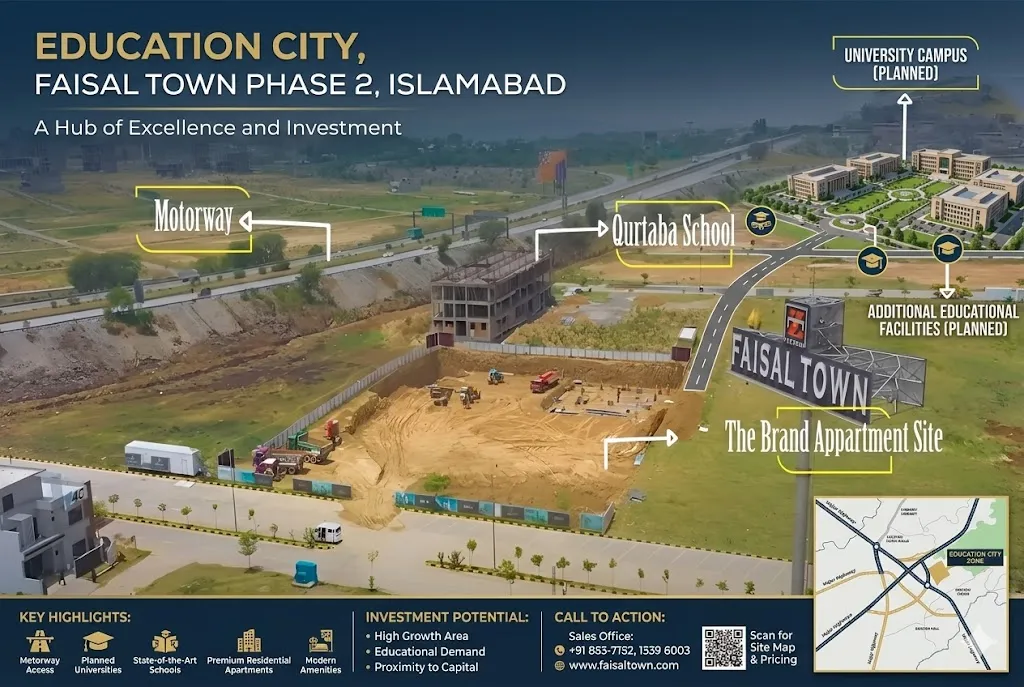
On the commute side, the society’s access to the M-2 Motorway and Thalian Interchange does make travel to Islamabad and Rawalpindi manageable, even while other facilities are still catching up.
H3: Where End Users Should Be Cautious
End users should be cautious about booking in blocks still waiting on roads or utilities, since construction timelines in these areas can shift. It’s also worth confirming the NOC status directly with the developer, since this affects both legal standing and how quickly a block can move toward full development. Buying based on future promises alone, without checking current on-ground progress, is the most common mistake end users make here.

Is Faisal Town Phase 2 Good for Investors?
For buyers focused purely on returns, Faisal Town Phase 2 offers a different kind of appeal than it does for end users. Early-stage housing societies tend to have lower entry prices, and Faisal Town Phase 2 fits that pattern right now, with several blocks still in the early development stage.
This lower entry point comes with a trade-off, though. Prices that are lower today are lower because development and NOC approval are still in progress, which means there’s more uncertainty than in an established society. Investors who understand this trade-off, and who aren’t in a rush for quick possession, are usually the ones who find this stage of the project worth considering.
Why Investors Are Drawn to Faisal Town Phase 2
Investors are mainly drawn to the lower starting prices compared to more developed societies nearby, along with flexible installment plans that reduce the upfront cost. The society’s position near the M-2 Motorway and Rawalpindi Ring Road also plays a role, since improved road access tends to support price growth over time as development continues. These factors combined make it a common pick for buyers planning to hold rather than move in immediately.
Short-Term Investors vs Long-Term Investors
Short-term investors usually look for plots or files that can be resold within a year or two, often in blocks where development is progressing visibly, and demand is picking up. Long-term investors are more comfortable holding through the early development stage, betting on infrastructure projects like the Ring Road to push prices up over several years. Neither approach is risk-free, but the two require very different levels of patience and tolerance for delays.
File Trading vs Holding a Confirmed Plot
File trading means buying and reselling a booking before a specific plot number is even assigned, which usually costs less but carries more uncertainty around final allocation. Holding a confirmed plot, on the other hand, means you already know your exact location and can plan around it with more confidence. Investors newer to real estate are generally better off starting with a confirmed plot, since file trading requires closer market tracking and a higher tolerance for last-minute changes.
Impact on Living vs Impact on Investment (Block-by-Block Comparison)
Once you know whether you’re leaning toward living or investing, it helps to see how that goal lines up against the actual blocks in Faisal Town Phase 2. Not every block serves both purposes equally well. Some are further along and better suited to someone who wants to build soon, while others still make more sense as a long-term hold.
The table below breaks down the three main options discussed so far General Block, Model Block, and Overseas Enclave based on what matters most for each type of buyer. This isn’t about which block is “better” overall, since that depends entirely on your own goal, but about which one fits which purpose more closely at this stage of development.
General Block, Model Block, and Overseas Enclave Compared
| Block | Impact on Living | Impact on Investment |
| General Block | Still in early development; not ideal for building soon | Lower entry price with installment options, suited to patient investors |
| Model Block (Sector O) | Most developed sector; closer to being livable, though utilities still being confirmed | Cash-only requirement raises upfront cost, but development progress lowers uncertainty |
| Overseas Enclave | Early development stage; not practical for near-term living | Popular with overseas buyers seeking installment flexibility and long-term hold |
Sector O stands out for end users mainly because of how far its infrastructure has progressed compared to other sectors. Meanwhile, the General Block and Overseas Enclave lean more toward investors who don’t mind waiting, largely because their lower prices reflect their earlier stage of development rather than any drawback in location.
NOC and Legal Risk; Why It Matters Differently for Each Buyer Type
No matter which block you’re considering, NOC status is one factor every buyer in Faisal Town Phase 2 needs to understand before committing money. NOC, or No Objection Certificate, confirms whether a housing society has legal approval from the relevant development authority. Buying before this approval comes through isn’t unusual for newer societies, but it does carry more risk than buying into an already-approved project.
What changes is how much that risk actually matters to you. Someone planning to live on the plot personally has a different relationship with legal risk than someone buying purely to hold and resell.
Current NOC Status with RDA
Faisal Town Phase 2’s NOC application is currently under process with the Rawalpindi Development Authority (RDA) and has not yet been fully approved. This means the society is still operating at a pre-NOC stage, which is common for large housing projects in their early years but should be confirmed directly with the developer or RDA before booking, since approval status can change over time.
How Risk Looks Different for a Living Buyer vs an Investor
For an end user, NOC risk directly affects when construction can safely begin and how secure their long-term home investment feels. Delays or complications here can mean postponing a family’s actual move-in plans. For an investor, the same risk plays out differently; it affects resale value and timing more than daily life, since an investor isn’t relying on the plot for immediate use. This is why investors are often more willing to enter at the pre-NOC stage, while end users are generally advised to wait for clearer approval before starting construction.
Buyer-Type Breakdown: Which Path Fits You
Not every buyer in Faisal Town Phase 2 fits neatly into “end user” or “investor.” Real decisions are usually more specific than that, shaped by income, timeline, and whether you’re buying locally or from abroad. Breaking things down by buyer type makes it easier to see where you actually fit, instead of forcing your situation into one of two broad categories.
The four profiles below cover the most common buyers in this society right now. Each one comes with a different priority, whether that’s building a home soon, settling in from overseas, flipping a plot quickly, or holding for several years. Matching your own situation to one of these can help you decide which block and payment plan actually make sense for you.
Salaried End User Planning to Build
This buyer usually has a fixed monthly income and wants predictable installments rather than a high upfront cost. Sector O tends to suit this profile best, given its further-along development, though the cash-only requirement there can be a hurdle for someone relying on monthly payments. Blocks with installment plans may be a more realistic fit if building isn’t urgent.
Overseas Pakistani Looking to Invest or Settle
This buyer often wants flexibility more than immediate possession, since they may not be visiting the site regularly. The Overseas Enclave is designed with this in mind, offering installment plans that don’t require constant presence in Pakistan. Whether the goal is future settlement or simply holding the plot, this buyer benefits most from clear documentation and a developer who communicates updates reliably.
Short-Term Investor Seeking Quick Resale
This buyer is focused on moving in and out within a year or two, usually targeting blocks where visible development is already pushing demand upward. Sector O fits this pattern better than early-stage blocks, since progress on the ground tends to attract quicker buyer interest. This approach requires closer market tracking and a readiness to sell once a reasonable profit margin appears.
Long-Term Investor Holding for Appreciation
This buyer is comfortable waiting several years and is less concerned with a block’s current development stage. Early-stage sectors like the General Block or Overseas Enclave can suit this profile, since lower entry prices leave more room for value growth as infrastructure projects like the Ring Road move forward. Patience matters more here than timing the market perfectly.
Payment Plan Fit for Each Buyer Type
Once you know your buyer profile, the next practical question is how you’ll actually pay for the plot. Faisal Town Phase 2 offers both installment plans and lump-sum options, but which one makes sense depends heavily on whether you’re buying to live or to invest. A payment structure that works well for a salaried end user might not be the smartest route for an investor, and the other way around.
This isn’t just about affordability; it’s about matching the payment style to your timeline and goals. Someone planning to build soon has different cash flow needs than someone holding a plot for five years. The section below looks at how installments and lump-sum payments serve these two purposes differently.
Installments vs Lump-Sum, Which Suits Living, Which Suits Investment
Installment plans generally suit end users better, since they spread cost over time and match a steady monthly income without requiring a large sum upfront. This makes blocks with installment options more practical for someone planning to build gradually rather than all at once.
Lump-sum payments, on the other hand, often appeal more to investors who have capital ready and want to lock in a 20% discount rather than pay the full price through monthly installments. For an investor holding long-term, that discount can meaningfully improve overall returns, while an end user without that capital upfront is usually better served sticking to a structured installment schedule.
Common Mistakes Buyers Make When Choosing Their Purpose
One of the most common mistakes buyers make is picking a block based on price alone, without checking whether it actually matches their goal. Some of the most frequent slip-ups include:
- An end user booking a cheaper, early-stage block and ending up with a much longer wait to start construction than expected
- An investor overpaying for a developed block like Sector O without actually needing the faster possession it offers
- Ignoring NOC status simply because a sales representative downplays it
- Skipping an in-person site visit and assuming the master plan reflects current, on-ground progress
Taking the time to match your purpose, budget, and risk tolerance to the right block avoids most of these regrets later.
Conclusion:
Faisal Town Phase 2 isn’t a one-size-fits-all society, and that’s really the answer to this question. It can work well for end users, particularly in more developed sectors like Sector O, and it can work well for investors, especially in early-stage blocks like the General Block or Overseas Enclave. What it can’t do is serve both goals equally well within the same block at the same stage of development.
If you’re planning to build and live soon, your safest path is a block with visible progress and confirmed utilities, even if that means a higher upfront cost. If your goal is long-term value growth and you’re comfortable waiting through the current pre-NOC stage, an early-stage block with lower entry pricing may serve you better. The right choice isn’t about which buyer type Faisal Town Phase 2 favors; it’s about matching your own timeline and risk tolerance to the block that fits it.